Between Acts slashing research and garment collage

Audience Unfound: Behind the Scenes

Slashing

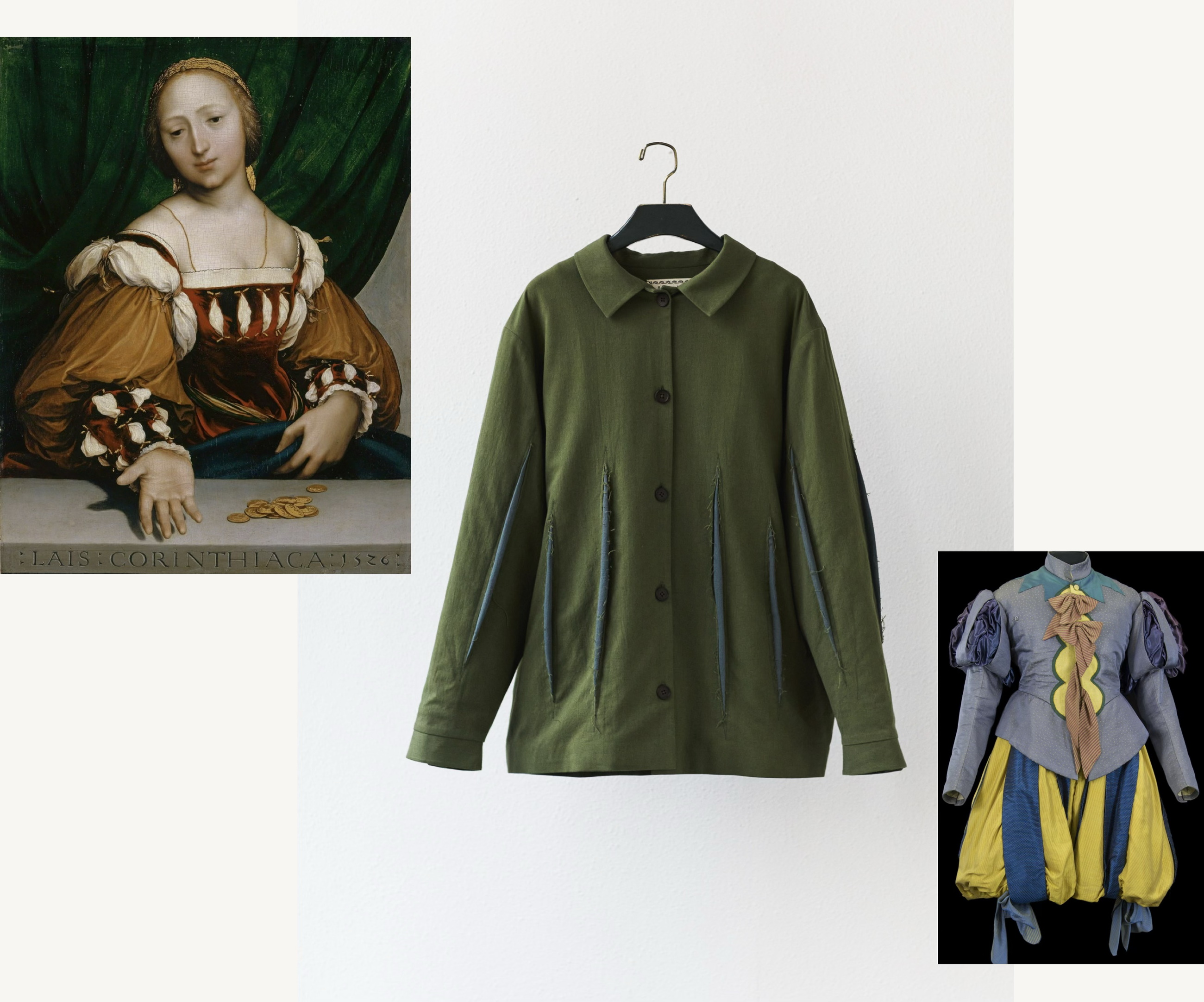
Slashing is a decorative technique that involved making small cuts on the outer fabric of a garment in order to reveal inner clothing or lining. It creates a visual language between outside and inside, damage and decoration.

In Audience Unfound, we take slashing out of the contexts of historical dress and performance costume and turn it into a structural collage. Rather than simply adding drama, it suggests the idea of something being exposed.
Between Acts teeth research and garment collage

Teeth

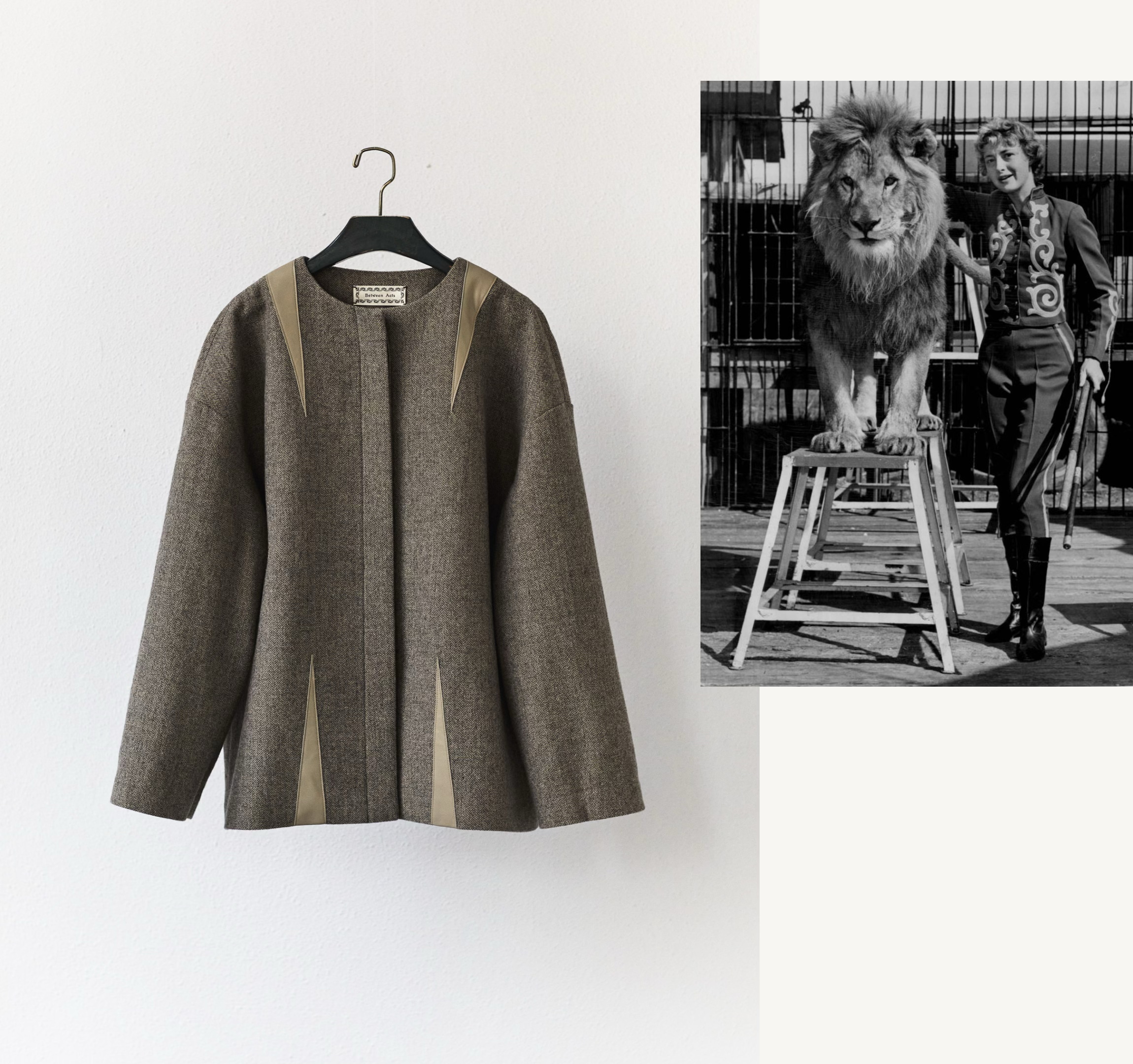
The Teeth element comes from a darkly comic circus image we imagined for the collection: a lion tamer being turned on by the lion. The scene feels dangerous, but also slightly absurd. The tamer is supposed to stand for control, order, and authority. But in this moment, what he tries to control turns back and swallows him.

We chose not to use teeth as a literal motif. Instead, they are abstracted into triangles and placed with restraint on a rather pliable herringbone jacket. This turns teeth from a clear sign of aggression into a geometric edge between pattern and structure.

They can still be read as teeth, or simply as a strange little break within everyday wear.

Between Acts pelisse research and garment collage

Pelisse

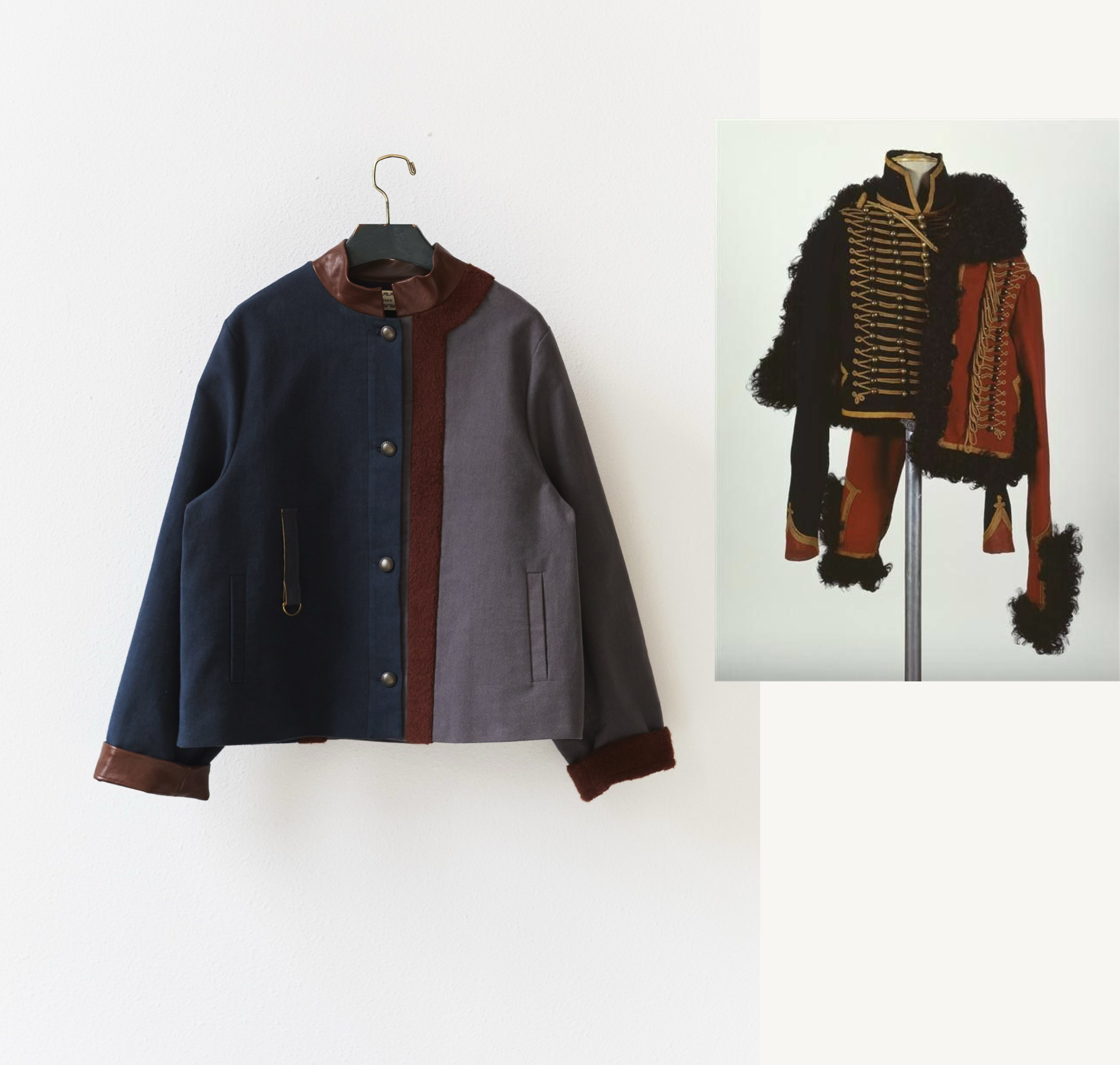
The character of the Pelisse Jacket is built largely through its fabric. We chose a moleskin cotton dyed twill, processed in small batches in the Omi region on the east shore of Lake Biwa, Japan. Repeated washing and brushing give the fabric a slightly aged feeling. It keeps a structure reminiscent of a Ringmaster uniform, while softening the coldness and stiffness that reference might carry.

The asymmetric plush edging and contrast color come from a simplified reading of the shawl structure in the pelisse. The plush contrast fabric is knitted on a special circular machine, using wool yarn made with fibers from Bishu, Japan.

Between Acts pierrot research and garment collage

Pierrot

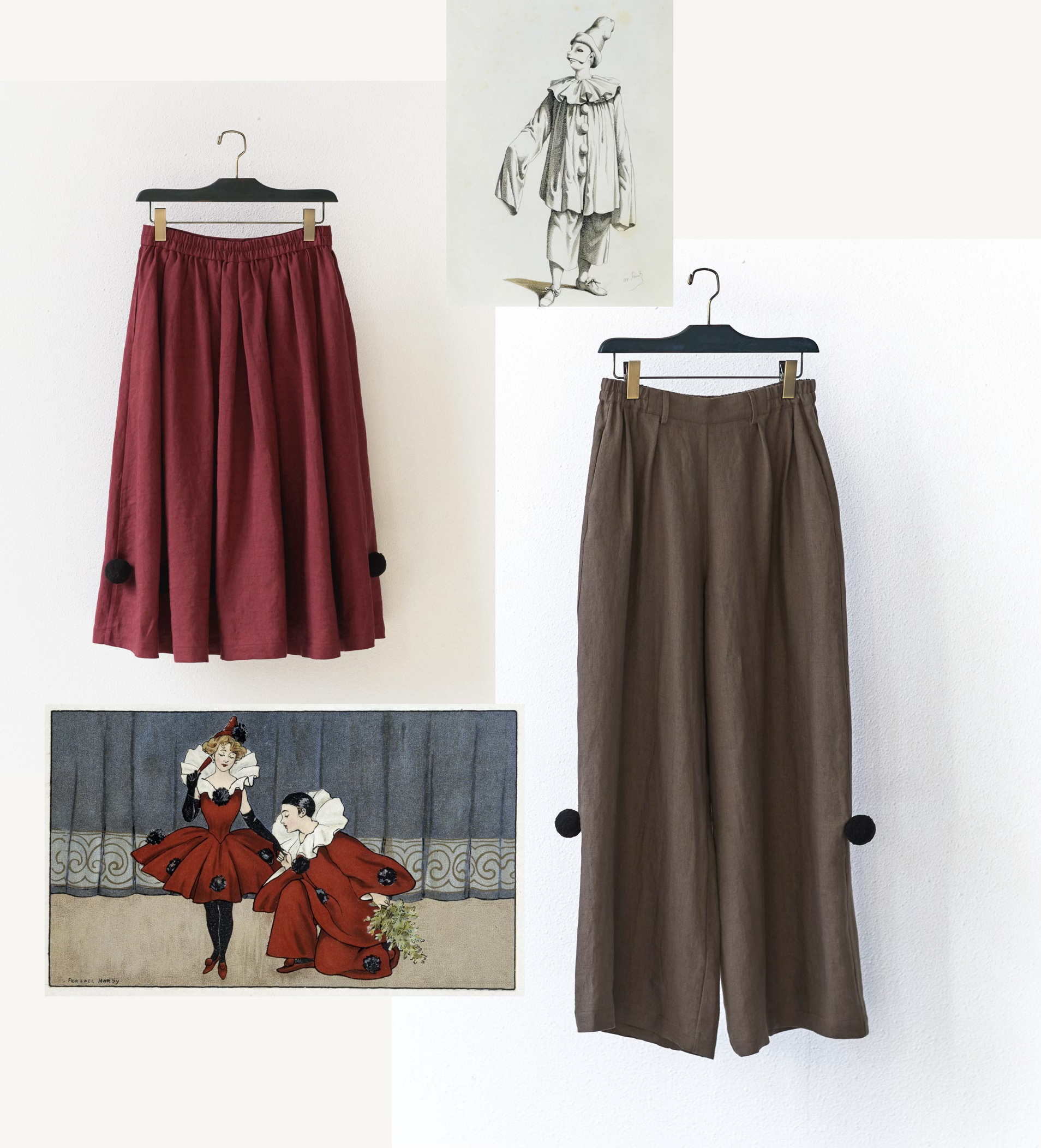
In the traditions of Pierrot and Pedrolino dress, large front buttons, circular ornaments, and loose trousers often carry a comic sense of performance. We reduced these references into smaller details, allowing the clothes to keep a slight sense of play in everyday settings.

The pom-poms are sewn by hand in our atelier. The linen used for the skirt and trousers comes from Hamamatsu, Japan, where it is processed and dyed in small batches by craftspeople. The natural unevenness of the yarn gives the fabric its texture, creating a quality that feels both luxurious and unforced.

Between Acts harlequin research and garment collage

Harlequin

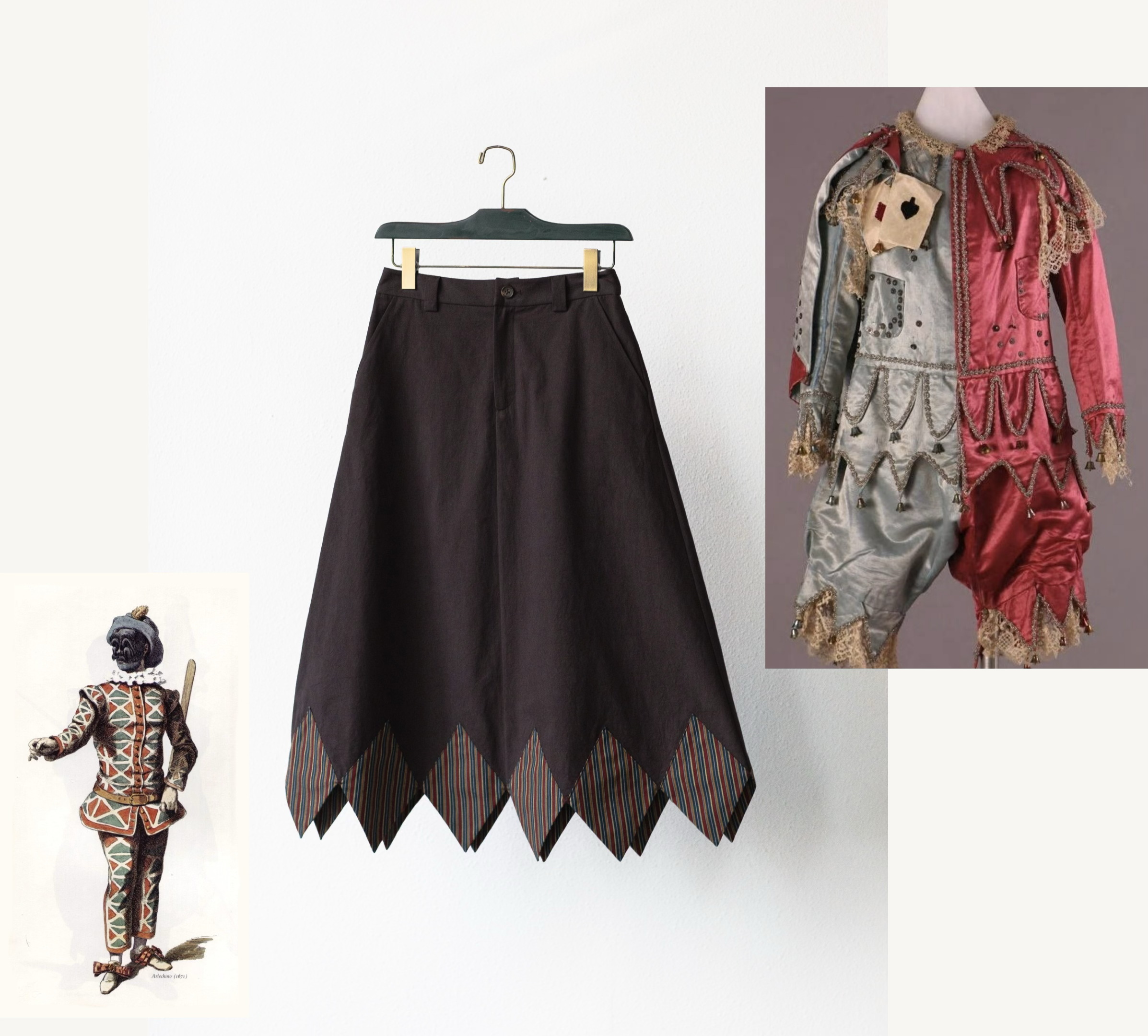
Harlequin is an important figure in Commedia dell'arte in Italy, often described as a nimble and astute servant. His costume was first associated with odd-shaped patches and fabric scraps, and later developed into colored triangles and diamond-shaped lozenges. Because of this history, the motif is already tied to patchwork, movement, and theatrical identity.

For this skirt, we did not want it to become a literal theatrical reference, so we moved the idea into the garment's structure, allowing the diamonds to become part of the hem.

The skirt's cotton poplin is hand-dyed by craftspeople in Enshu, Japan, and dried locally under strong wind and sunlight using a technique called 天日干し, meaning literally sun drying. This gives the fabric its distinct texture. The diamond pieces at the hem are made from Mikawa cotton, then cut and pieced by hand by the tailors in our atelier to achieve a refined, symmetrical effect.

Between Acts Bonnet D'âne research and accessory collage

Le Bonnet D'âne

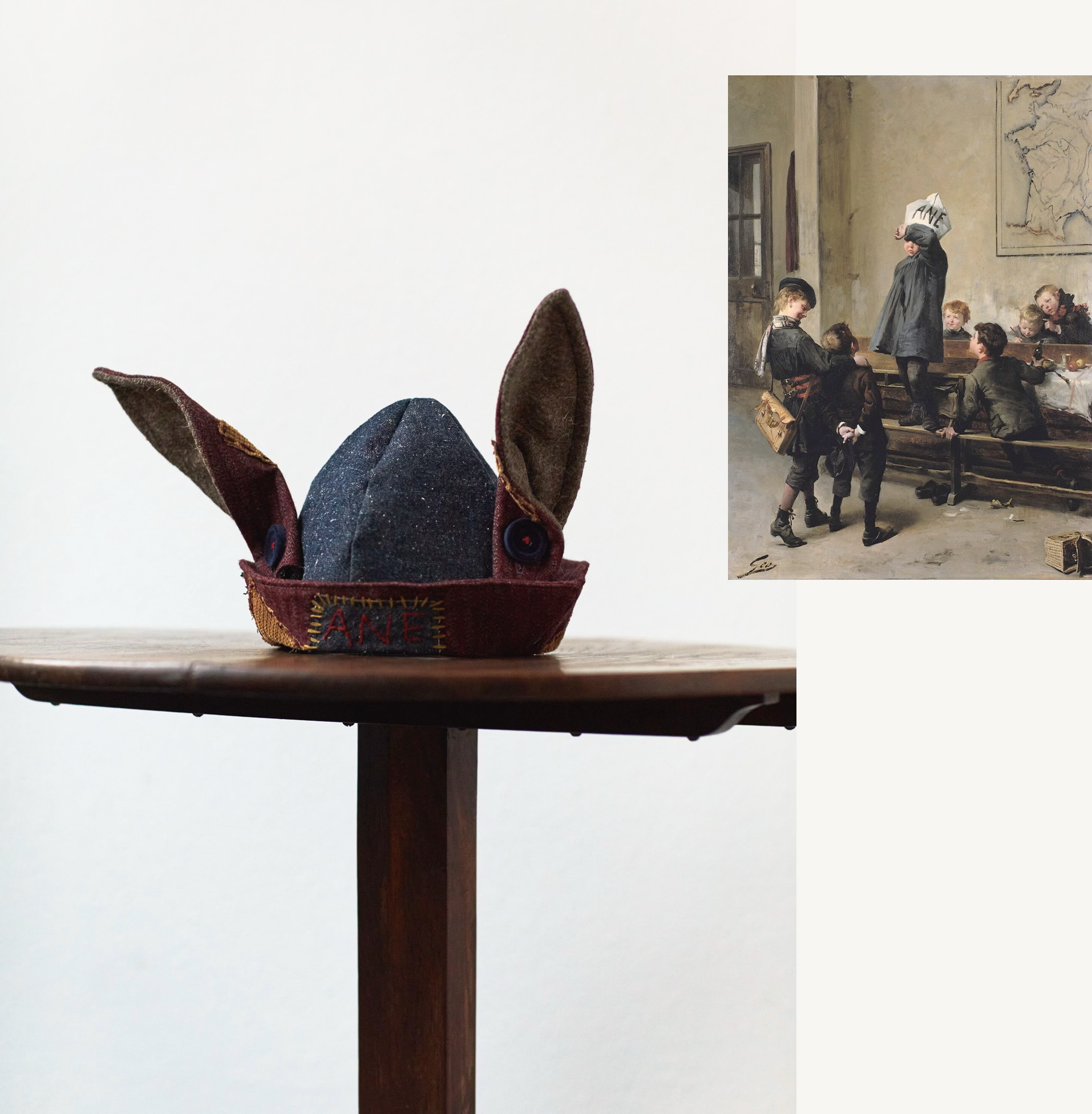
Le bonnet d'âne, similar to the dunce hat in the English-speaking world, was once a symbol of humiliation and punishment, used to mark a child as failing, slow, or not meeting expectations. Seen outside that disciplinary context today, the donkey-eared hat can look almost like a simple animal cap, carrying a sense of childhood play and awkward charm.

The contrast is quite cruel: an object that now looks toy-like once worked as a public label, placing the message of "not smart enough" or "not as expected" in the most visible place.

We reworked the symbol into an adjustable accessory, turning what once suggested punishment into a small refusal of cliches of "qualified" and "standard." The hat is sewn by hand in our atelier and finished through patchwork and embroidery.

Between Acts